
-
- Distillate
Distillate THC
- Price range: $200.00 through $1,500.00
- Select options This product has multiple variants. The options may be chosen on the product page
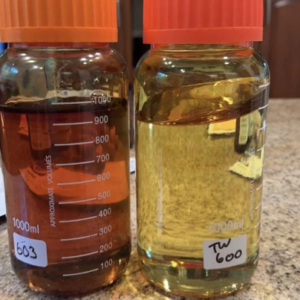
THC Distillate – Bulk Options, Potency & Lab-Tested Quality
Our THC distillate collection features hemp-derived concentrates refined for purity, consistency, and performance. These products are intended for experienced buyers seeking reliable distillate options for manufacturing, formulation, or research applications.
THC distillate is a highly concentrated extract valued for its versatility and consistent cannabinoid profile. Each product in this collection is supported by third-party laboratory testing to verify potency and compliance.
Why Choose Our THC Distillate
- Hemp-derived THC distillate with consistent potency
- Third-party lab tested for purity and compliance
- Available in bulk options for scalable use
- Suitable for manufacturing, formulation, and R&D
- Ships from a U.S.-based supplier
Common Uses for THC Distillate
THC distillate is commonly used as an input ingredient rather than a finished consumer product. Typical applications include:
- Infused product manufacturing
- Custom cannabinoid formulations
- Concentrate blending
- Controlled research applications
Potency, Testing & Compliance
Each THC distillate product is accompanied by third-party laboratory testing to confirm cannabinoid content and ensure compliance with federal hemp standards. Testing verifies that Delta-9 THC levels remain within legal limits at the time of analysis.
Hemp-derived THC distillate is legal when sourced from compliant hemp and supported by proper documentation.
Understanding THC and THCa Conversion
In hemp-derived extracts, THC content is closely related to THCa, the naturally occurring precursor cannabinoid. THCa remains non-intoxicating until heat is applied, at which point it converts into THC.
For a deeper understanding of how THCa works and converts during processing, review:
How THCa works, converts, and fits within hemp compliance
THC Distillate for Professional Buyers
This collection is curated for professional buyers seeking dependable supply, transparent testing, and consistent quality. Each product is selected to support scalable operations and compliant use within the hemp framework.
Meanwhile, the two marijuana concentrates are polar opposites regarding the science behind them, including the outcomes for the user and how the concentrates are derived.
So, what is the difference between liquid live resin and distillate cartridges? Do these differences take part in determining your desired experience? At FLUENT, we’d love to help you make an informed decision for your specific needs by breaking down all the important differences in distillate vs. LLR cartridges.
What Does Distillate Mean and What is a Distillate Cartridge?
A distillate cartridge is a marijuana concentrate produced from various marijuana extracts. Distillate cartridges contain highly distilled and nearly isolated marijuana extracts that can be extracted into the oil. The extracted crude oil has a lot of potential because of its strength and purity and can be crafted into marijuana edibles and vape cartridges.
All unwanted compounds are removed during distillation, leaving the desired marijuana extract in its purest form. That makes distillate cartridges excellent if you’re after a specific concentrate with a particular outcome or flavor.
These Are Different Than LLR Cartridges
LLR (liquid live resin) cartridges are marijuana concentrates known for their full flavor profiles. These cartridges undergo extraction, which retains a full spectrum of marijuana plant concentrate. They’re then winterized to keep the product fresh for longer periods of time.
Unlike the distillate cartridge that undergoes distillation, the liquid live resin goes straight into a cartridge. LLR cartridges are excellent if you’re looking for a compound profile of the whole marijuana plant in your product, including the smell and flavor of marijuana strains.
So How is a Distillate Cartridge Different?
Vape cartridges are not created equally, and with the ever-expanding world of marijuana, it’s crucial to understand what differentiates marijuana concentrates. There are many differences between live resin and distillate, including different extraction processes, potencies, flavors, and experiences.
The Extraction Process of Distillate
The main difference between these two types of extracts is that live resin is obtained from fresh marijauna plants, while distillate comes from dried, cured buds. The process of extracting cannabinoids varies depending on the type of solvent used. Some solvents may not extract certain compounds, such as CBN (cannabinol) or THCV (tetrahydrocannabivarin). Decarboxylation and Winterization are also important steps in the production of both types of extracts.
With live resin, live marijuana is harvested and immediately frozen. The live resin is then decarboxylated using lab-grade equipment to obtain liquid live resin. Conversely, a distillate is produced from dried, cured marijuana at room temperature combined with either CO2, ethanol, or butane. The mixture undergoes distillation using heat, pressure, and steam.
Terpene Content
Live resin is very high in terpenes, while distillate is most often void of terpenes. Terpenes include active compounds responsible for the smell, taste/flavor, and outcomes of different strains of the marijuana plant.
The main purpose of creating live resin is to retain a high percentage of terpene content in marijuana concentrates. With most terpenes left untouched, the live resin features the full spectrum of the original marijuana plant. On the contrary, distillate is less flavorful because it lacks terpenes. Instead, distillate prioritizes more pure and stronger marijuana concentrate.
The Entourage Effect
An entourage effect only works when many marijuana compounds, including terpenes and flavonoids, work together. Most marijuana users believe retaining all marijuana’s compounds is the best way to maximize the plant’s advantages. For instance, adding non-marijuana terpenes to distillate is not as favorable as adding the original terpenes removed in distillation.
The Smoking Experience
When it comes to live resin vs. distillate, it all comes down to your preference. You may want to vape odorless distillate, enjoy high concentrations of THC, or the juicy, vibrant live resin.
THC levels in live resin range from 20-50%, meaning that you’ll get a subtle psychoactive high from the live resin concentration. Meanwhile, THC levels in distillate range from 60-95%, a concentration that will give you a much more intense high.
Find Distillate Cartridges and LLR at FLUENT today!
Both distillate and LLR cartridges are carefully crafted to offer different purposes. Which is right for you solely depends on your needs and preferences. The bottom line is that it’s important to consider the quality and purity of a product when selecting any marijuana concentrate. You also want to choose a concentrate compatible with your needs because each concentrate is crafted differently.
So, are you looking for classic LLR or distillate vapes in Pennsylvania? FLUENT has you covered with both concentrates. You don’t have to do trial and error because we can help inform you about the available options and offer appropriate insight into the extracts that might work best for your needs.
Whether you find relief from distillate cartridges or different flavors of LLR cartridges, your local FLUENT dispensary will offer unparalleled services. Our marijuana products are readily available to all 21+ Pennsylvania adult residents with a valid medical marijuana card and ID.
Distillate is popular due to its high potency and versatility. It can be used to dab or vaporize and can also be infused into edibles, tinctures, topicals, or added to pre-rolls, moon rocks, and various other cannabis products.
Learn more about THC distillate, how it’s made, and where to find it near you.
What is THC distillate?
Distillate is a cannabis extract in which the final product has been systematically stripped of all materials and compounds except for one specific cannabinoid. The most common forms of distillate are tetrahydrocannabinol (THC) oil and cannabidiol (CBD) oil, with their percentages ranging between 90 – 100% pure cannabinoid, making them extremely potent.
 Photo by: Gina Coleman/Weedmaps
It’s the base ingredient of most edibles and vape cartridges and typically lacks flavor, taste, or aroma. And though it also lacks the beneficial terpenes that naturally occur in the source cannabis plant, it allows complete control over a final product’s taste and smell. Adding terpenes to distillate later in the process is possible, and many manufacturers do this, though it’s been theorized that any medicinal advantages are reduced by their initial removal.
How is distillate made?
Making distillate is a complex and technical process that requires specialized equipment, a controlled lab setting, and a deep knowledge of chemistry. Essentially, it’s something you don’t want to try at home. For informational purposes, the distillation process typically involves the following steps:
- Extraction: First, THC is extracted from the cannabis plant material. Chemists use various methods for the extraction process, such as carbon dioxide (CO2) extraction, ethanol extraction, or hydrocarbon extraction. Each method has its advantages and disadvantages regarding purity, efficiency, and safety.
- Winterization: This step involves mixing the raw extract with ethanol and then freezing it, which helps to separate the fats, waxes, and lipids from the cannabinoids as they coagulate and precipitate out at low temperatures.
- Filtration: The winterized solution is then filtered to remove the solidified impurities.
- Evaporation: After filtration, the solution is subjected to rotary evaporation. Heat and rotation evaporate the ethanol in this process, leaving behind a more refined cannabis oil.
- Decarboxylation: By this point, the oil is full of THCA, or tetrahydrocannabinolic acid, the non-psychoactive precursor compound to THC found in raw cannabis plants. It becomes THC when decarboxylated, typically through heat. The refined oil needs to be decarboxylated to convert THCA into psychoactive THC.
- Distillation: Finally, the decarboxylated cannabis oil is processed through a distillation unit. This process uses heat and a vacuum to vaporize and then condense the cannabinoids, separating them based on their boiling points. THC, having a unique boiling point, is isolated as a distillate.
- Refinement: Further refinement steps like molecular distillation are sometimes employed to achieve higher purity levels.
Does distillate get you high?
Whether distillate gets you high depends on the cannabinoid you’re consuming. By removing virtually everything except for the desired cannabinoid, the final product is incredibly potent, so if you’re consuming a THC distillate, you will probably get very high, as the resulting oil will be almost pure THC. If you consume a CBD distillate, you will tap into the therapeutic benefits of CBD, but since CBD is non-psychoactive, you will not get high.
What are the effects of THC distillate?
How you experience THC distillate depends on your individual response to THC and the dose you take.
 Photo by: Gina Coleman/Weedmaps
Here’s a list of the potential effects of THC distillate, some of which are more pleasant than others:
- Euphoria
- Relaxation
- Altered perception: Your senses, like sight and sound, might be heightened or altered.
- Increased appetite: It’s common to experience the munchies, or an increase in appetite, after consuming THC.
- Dry mouth
- Red eyes
- Slower reaction times: THC may slow down your reaction times and affect motor skills, so don’t drive or operate heavy machinery.
- Short-term memory loss: You might find it harder to remember things while under the influence.
- Drowsiness
- Anxiety or paranoia: In high doses, THC can lead to feelings of anxiety or paranoia.
Benefits and risks of THC distillate
As with all cannabis products, there are pros and cons to consider:
Benefits
- High potency: What can be a risk for some is a major benefit to others. THC distillate is very strong, so a little goes a long way in providing effects. It can be a cost-effective way to consume THC for those with high tolerances or medicinal needs.
- Purity: Distillate is highly refined, containing far fewer impurities and plant material than other extracts.
- Versatility: THC distillate is a flavorless oil that can be used in a variety of ways, from vaping to making edibles and topicals.
Risks
- Risk of overconsumption: THC distillate is potent by design, so it’s easy to use too much, which can lead to uncomfortable effects like anxiety.
- Risk of increased tolerance: Frequently using high-THC products might lead to a higher tolerance, requiring more to achieve the same effects.
- Legal risks: It’s important to know the laws regarding concentrated cannabis products in your state, as many have different limits on the amount of concentrates you can possess at a time.
- Addition of thinning agents: One of the negative points of distillate is that to make it, thinning agents have to be added to the production, including vegetable glycerine, propylene glycol, and MTC oil.
How do you use THC distillate?
There are many ways to incorporate THC distillate into your cannabis consumption routine.
Dabbing
 Photo by: Gina Coleman/Weedmaps
Dabbing involves using a dab rig, a type of water pipe designed specifically for concentrates like distillate. You heat the nail, typically made of quartz, titanium, or ceramic, with a blow torch, drop a rice-sized amount of distillate directly onto the heated surface, and inhale the vapor produced through the mouthpiece.
Vaping
To vape THC distillate, use a vape pen designed for cannabis concentrates. Fill the chamber with a small amount (rice or pea-sized), then use the pen to heat and vaporize it. Inhale the vapor through the mouthpiece of the pen.
Making edibles
 Photo by: Gina Coleman/Weedmaps
Since THC distillate is already activated (decarboxylated), you can directly mix it into foods or recipes. Start with a minimal amount, around 2 – 5 milligrams per dose, and ensure it’s evenly distributed in the edible.
Smoking
To smoke distillate, you can spread a thin line of it over ground cannabis before rolling it into a joint. Or, mix it in with the flower in your bowl or bong for enhanced potency.
Making topicals
 Photo by: Gina Coleman/Weedmaps
To make infused topicals, mix THC distillate with a carrier oil or lotion. Apply the mixture directly to the skin for localized effects. It’s often used for therapeutic purposes like localized pain relief or skin conditions since topicals typically don’t produce intoxicating effects.
Common THC distillate products
Explore some of the most common THC distillate products available in the cannabis market:
Vape cartridges and pens
 Photo by: Gina Coleman/Weedmaps
Different brands offer distillate-filled vape cartridges and pens, which do not need loading or cleaning. They provide a hassle-free vaping experience and are ideal for discreet consumption.
Infused edibles
The category is vast. However, many brands make baked goods, gummies, chocolates, beverages, and more using only THC distillate to infuse their edibles. Any of these treats will provide a longer-lasting and often more intense effect compared to smoking or vaping, so consume them carefully and wait at least two hours after consumption to see how you’re feeling before consuming more.
Infused pre-rolls
 Photo by: Gina Coleman/Weedmaps
Many infused pre-rolls are enhanced with THC distillate. Brands will add distillate to ground cannabis before rolling it into a pre-roll, which will significantly increase its potency, making it a common choice for high-tolerance consumers.
THC distillate syringes
A THC distillate syringe is a precise, convenient way to dispense pure THC distillate. These syringes contain highly concentrated THC extract, offering an easy way to dose and apply the product. Found in most dispensaries, they’re ideal for dabbing, refilling vape cartridges, or infusing edibles, and provide a mess-free, accurate way to dose THC distillate.
Tips for purchasing distillate
When purchasing THC distillate, consider the following tips to ensure you’re getting the highest quality product:
- Buy from licensed dispensaries. This can ensure that a product complies with safety regulations and is free from harmful contaminants.
- Ask questions. Don’t hesitate to ask your budtender questions about the product’s source, extraction method, and recommended usage. Understand the type of distillate you are buying — whether it’s THC, CBD, or a specific cannabinoid blend — and ensure it meets your needs and is easy to dose.
- Compare prices. While price shouldn’t be the only factor, compare prices among reputable vendors to ensure you get a fair deal. Extremely low prices can sometimes indicate a low-quality product.
- Look for lab test results. Look for products that have been lab-tested and come with a certificate of analysis (COA). This provides information on potency and cannabinoid profiles and checks for pesticides, heavy metals, and solvents.
- Observe the packaging. Proper packaging is essential for maintaining the quality of the distillate. It should be well-sealed and clearly labeled with contents and usage instructions.
- Research the brand. Look for customer reviews and feedback to gauge the quality and reliability of their products.
Bottom line
Cannabis distillates are an efficient way to get high and experience specific cannabinoids in their purest form. To get the most out of distillates and be confident you’re getting high-quality products, purchase THC distillate from legal brands and licensed dispensaries.
FAQ
Distillate vs. concentrates: what’s the difference?
Distillate is a highly pure form of cannabis. It’s usually very strong, with THC or CBD levels often exceeding 90%. Making distillate involves several steps that remove almost everything except the THC or CBD, making it flavorless. People who like distillate favor it because it’s pure, potent, and flexible. You can use it in vape pens, edibles, or creams.
Concentrates cover a wider range of products like wax, shatter, and live resin. They are produced using various extraction methods, like CO2, butane, ethanol, or simple heat and pressure. Some retain more of the plant’s original compounds, so concentrates can have a fuller taste and offer a variety of effects, depending on what’s in them. People use concentrates primarily for dabbing or vaping, though some edible brands incorporate full-spectrum concentrates into their edibles.
What is a distillate pen?
Vape pens that contain pure distillate oil feature a cartridge filled with THC distillate, a heating element, and a battery that powers the heating element. As with any vape pen, the heating element vaporizes the oil inside the cartridge, and the vapor is then inhaled through the mouthpiece. Since they contain such a potent form of extract, these vape pens tend to be very strong.